Blog
Dental hygiene tips for healthy teeth & gums
10 Common Root Canal Myths vs Facts
What Are the Myths About Root Canal And Why Do They Spread
Root canals often carry a reputation that sounds far worse than the real experience. The moment many people hear the term, they picture a painful dental appointment waiting ahead. These assumptions usually come from old stories that have circulated for years and rarely get questioned.
In reality, dentistry has advanced a great deal. Dental tools today are more advanced than they were in the past. Dentists can work with greater precision, and imaging provides clearer detail. Pain management has also improved considerably. Even so, the myths about root canal procedures continue to spread. People tend to repeat outdated experiences instead of discussing the many routine and successful treatments that dentists perform every day.
What Do Statistics Say About Root Canal Treatment
Root canal therapy is a routine dental procedure used to treat teeth that develop an infection deep inside. The goal is simple. Remove the infection and allow the natural tooth to stay in place. In many situations, this approach prevents the need for extraction and helps patients continue using their original teeth for years.
Millions of patients undergo the procedure every year. After the procedure, most patients return to their usual chewing habits and daily use of the tooth. The treated tooth generally functions much like any other. However, myths about root canal treatment still influence public perception of the procedure.
Statistics help put the situation in perspective. The American Association of Endodontists has reported extensive data on root canal procedures. Their research indicates that dentists in the United States perform more than 15 million of these treatments annually. Numbers at that level reflect how routine the procedure has become in modern dental practice.
Why Myth 1 Says Root Canals Are Very Painful
Some patients still expect root canal therapy to be painful. That expectation usually comes from myths about root canal treatment. It has been one of the leading causes for people to delay dental appointments.
For most patients today, the procedure is far less uncomfortable than expected. Dentists start by carefully numbing the tooth with local anesthetic so the area remains insensitive while the treatment is performed.
Patient experiences reported in surveys show a similar pattern. The American Association of Endodontists also surveyed patients. Those who had already received root canal therapy were six times more likely to describe the treatment as painless.
Why Myth 2 Links Root Canals to Illness
Some online sources still repeat the claim that root canals may trigger illness in other areas of the body. This belief is often tied to older myths about root canal treatment that developed from medical theories proposed more than a century ago.
Current scientific research does not support this claim. Studies carried out over the years have consistently found no reliable evidence behind it. The American Association of Endodontists also confirms that root canal treatment has not been linked to systemic disease.
Why Myth 3 Says Extraction Is Better
It is easy to think that extraction might solve the problem quickly. For some patients, removing the tooth sounds simpler than trying to repair it. The long-term picture is often different.
A missing tooth can affect more than appearance. The open space may gradually change how a person chews. Many times, the neighboring teeth drift toward that area. Replacement is often recommended after a tooth is lost. Implants or bridges are common options. Saving the natural tooth with endodontic treatment can help avoid that additional care.
Why Myth 4 Suggests Root Canal Teeth Do Not Last
Some patients think that a tooth treated with a root canal will not last very long. That concern still appears among the common myths about root canal treatment. It sometimes makes people uncertain about moving forward with care.
Clinical studies tell a different story. Research in endodontic literature reports that many treated teeth continue functioning for years. When the tooth is restored properly afterwards, success rates in several studies rise above 90 per cent.
What Myth 5 Gets Wrong About The Root Canal Procedure
For some patients, the term “root canal” sounds more dramatic than the procedure itself. The name sometimes leads people to believe that the root of the tooth is taken out during treatment. This belief is one of the myths about root canals that appears frequently online.
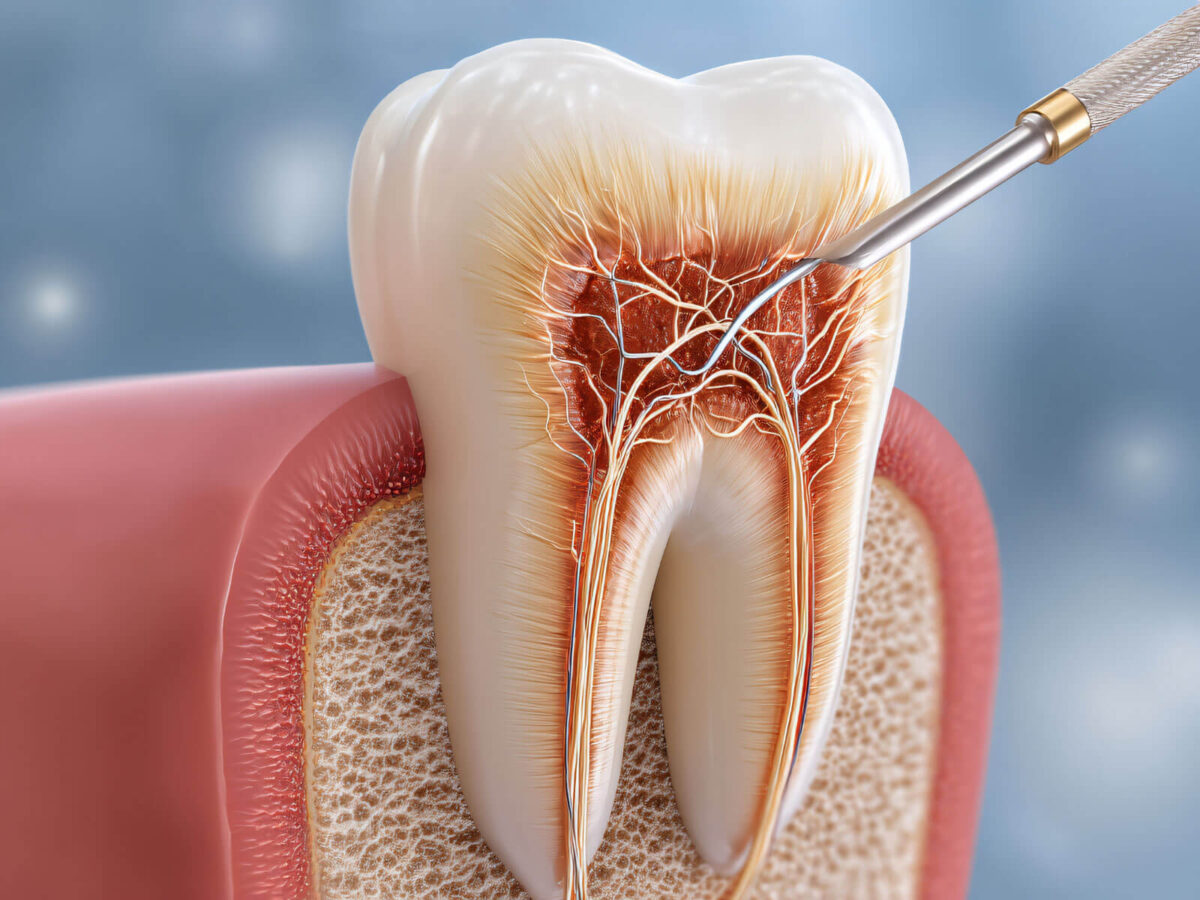
In reality, the dentist treats the small canals located inside the root. The infected pulp tissue is removed first. After that, the canals are cleaned and disinfected. They are then sealed. The root structure stays intact, so the tooth can continue functioning normally.
Why Myth 6 Says Recovery Takes A Long Time
Some patients expect a root canal to need many days of rest afterwards. They often imagine swelling or strong discomfort once the procedure is finished.
Many patients find that they can return to regular activities the following day. Mild soreness is possible when an infection was present before the procedure. However, the discomfort generally begins to ease once the infected tissue has been cleared.
Why Myth 7 Says Root Canal Procedures Need Multiple Visits
Some patients expect the procedure to stretch across several appointments. That assumption is fairly common. In many situations, however, treatment does not take that long.
A large number of root canal procedures are finished in one or two visits. Modern dental instruments help dentists work more efficiently inside the canals. Clear imaging also makes it easier to locate an infection. Every case is a little different. The number of visits generally depends on the tooth and the level of infection present.
Why Myth 8 Says Crowns Are Not Necessary
After the infection is removed, some patients assume treatment is finished. In many cases, dentists suggest placing a crown afterwards.
Sometimes a tooth becomes weaker after root canal therapy. To protect it, dentists usually suggest a crown. The crown covers the tooth and helps restore its ability to handle everyday chewing.
Why Myth 9 Says Root Canals Are Experimental
Root canal therapy has been part of dental care for many years. Over time, the procedure has improved as dental technology has continued to develop.
Modern tools allow dentists to work inside the canals with far more accuracy. Digital imaging helps dentists see the problem areas more clearly. Specialized instruments and improved filling materials also play an important role. Together, these advances have made treatment better and more comfortable for patients.
Why Myth 10 Says Root Canal Teeth Eventually Need Extraction
A common belief is that teeth treated with root canal therapy do not last very long. This concern appears frequently among the myths about root canal treatment that circulate among patients.
Treated teeth often remain functional for many years. Success usually depends on proper restoration after treatment. Ongoing dental care is important as well. Good daily cleaning also helps. With consistent care, the tooth can function normally.
FAQs
Are root canals painful?
Root canal treatments are not painful. Usually, anesthesia is used. Many patients later compare the sensation to getting a simple filling.
How many visits does it take?
Many treatments are finished in one or two visits.
Why save the tooth?
Keeping the natural tooth helps maintain chewing and bite balance.
How successful is it?
Studies report success rates above ninety percent.
Conclusion
The reputation of root canal therapy often comes from older information that no longer reflects modern dentistry. Many of the concerns patients hear today are linked to misunderstandings about the procedure.
Knowing about the myths about root canals is important. It helps you easily decide if it is something you would go for. If you have any questions, visit your dentist. Tell them about your concerns and get clear advice. Because no one should risk their beautiful small because of some myths.