Blog
Dental hygiene tips for healthy teeth & gums
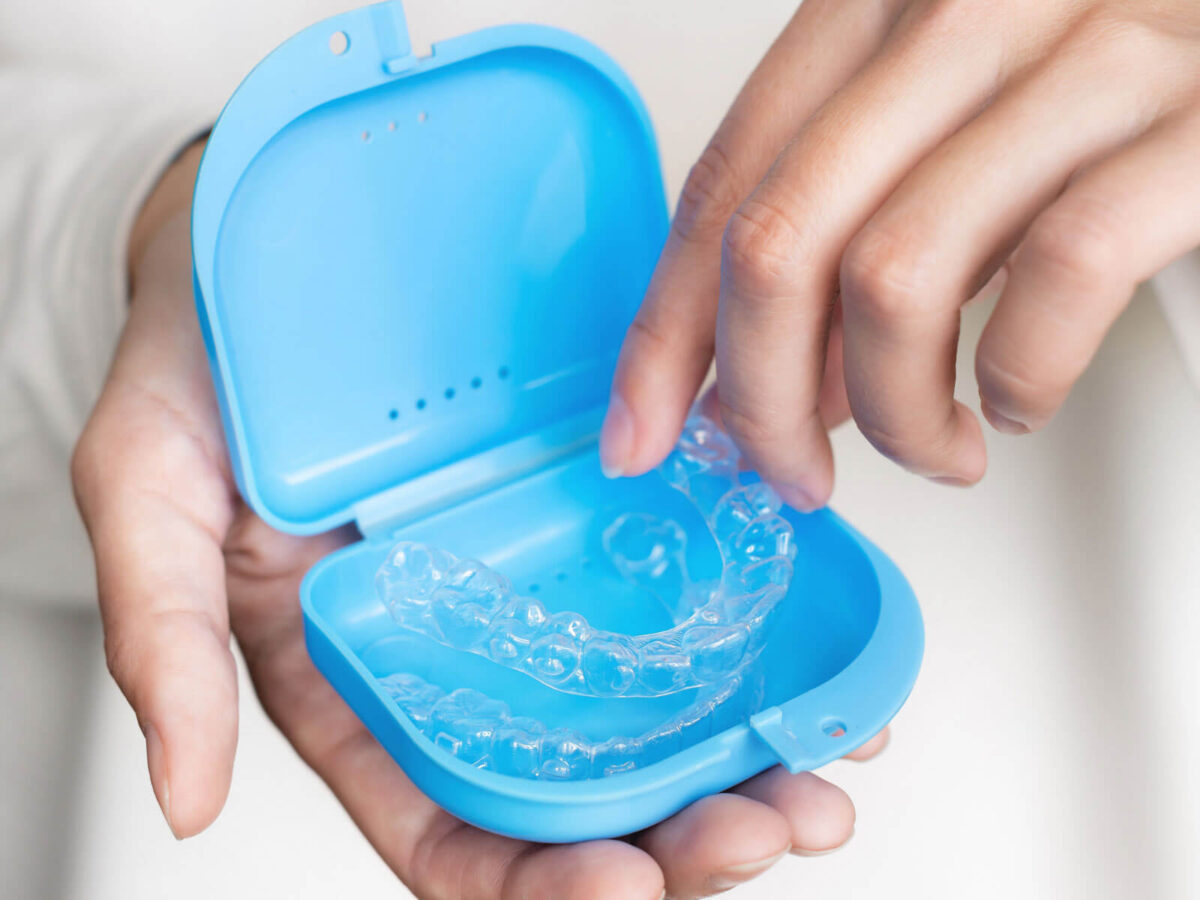
How to Clean Invisalign Trays: Step-by-Step Guide
Cleaning Invisalign trays looks like it should be obvious. Rinse them and move on. What nobody mentions is that a rinsed tray goes cloudy inside a few months, and the smell arrives well before the cloudiness does.
A coworker of mine wore Invisalign for about a year. She admits she didn’t take the cleaning part seriously until month four, when someone in a meeting asked what was on her teeth.
She had a routine sorted within a week of that. Nothing complicated, and she’d say the trays she’d already fogged never quite came back.
TL;DR
Cleaning Invisalign trays is mostly about frequency. Rinse them every time they come out of your mouth, which is more often than you’d think once you count meals and coffee.
Once a day, they need more than water. A soft toothbrush and clear unscented soap do it. Hot water is the thing to avoid entirely, because it warps the plastic and a warped tray stops fitting.
Invisalign cleaning crystals come in two or three times a week, for the grooves a brush can’t get into. Plenty of people finish treatment without ever buying a packet.
Why Does Daily Cleaning Actually Matter
Cleveland Clinic’s guidance for anyone in aligners is to clean them every day and store them properly whenever they’re out, which sounds like a low bar until you count how many people manage it.
Skip a day and a film starts forming on the plastic. A few days of that and it turns tacky, and it stops coming off with water alone. Six weeks of it and the cloudiness sets in for good.
The part people underestimate is the wear time. Cleveland Clinic puts it at a minimum of 22 hours a day, which means whatever is sitting on that tray is pressed against your enamel for nearly every hour you’re awake.
The Cleaning Routine, Step by Step
Rinse them the moment they come out. Every time, whether that’s a proper dinner or two minutes with a biscuit. Saliva and food dry onto plastic fast, and dried-on residue takes real effort to shift.
Once a day they need a brush. Keep a soft-bristled one separate from the brush you use on your teeth, and use clear unscented liquid soap on it. Toothpaste is the trap here, because most of it contains mild abrasives for whitening, and those will dull and scratch clear plastic over a few months.
Hot water is the one absolute. Warm plastic bends, and a bent tray sits wrong on the tooth it was made for. Lukewarm at the hottest.
Two or three soaks a week is where cleaning Invisalign trays stops being maintenance and starts being repair. Twenty minutes in a store-bought solution, or crystals if you’ve got them. There are grooves molded around every tooth on that tray, and no toothbrush is getting into those.
Dry them before they go back in the case. A cloth is quicker, but leaving them on the counter while you brush your teeth does the same job.
One more thing, and it’s the one that costs people money. Never wrap a tray in a napkin at a restaurant. It’s the single most common way aligners end up in a trash can.
Have Questions About Caring for Your Aligners?
Ask us at your next Invisalign check-in. We’ll walk through your specific cleaning routine.
Are Cleaning Crystals Really Worth Buying
Invisalign cleaning crystals dissolve into a soak that gets at what a brush can’t, which is mainly the deep grooves molded around each tooth. Fifteen to twenty minutes is what most brands ask for.
Nobody needs them. Rinsing and brushing will keep a tray functional for the full two years, and plenty of people never buy a single packet.
Where they earn their money is after the fact. If a tray has already gone cloudy or started to smell, a couple of soaks does more than a week of brushing will. Most people buy them at that point rather than before it.
Denture tablets come up constantly as the cheap substitute, and some of them work fine. Check if the box says it’s safe for aligners before you drop $2,000 of plastic into it.
How Often Should You Be Cleaning These Things
How often to clean aligners has three different answers depending on what you mean by clean. Rinsing is constant, every time a tray leaves your mouth, which works out to five or six times on a normal day.
Brushing with soap is twice daily. Fold it into whatever you already do at the sink morning and night, and it stops being a thing you have to remember.
The soak is where people go wrong in both directions. Two or three times a week is right. Every day starts to be hard on some tray materials, and once a week means the buildup wins before the soak comes round again.
What Other Hygiene Habits Actually Matter Here
The trays are half of it. The other half is what state your teeth are in when the trays go back on. Eat, skip the brush, snap the aligners in, and you’ve sealed lunch against your enamel for the next four hours.
That’s the trade nobody flags when they sell you on removable aligners. Being able to take them out only helps if you’re taking them out and then brushing, which is a different habit from just taking them out.
Which makes most Invisalign hygiene tips a question of what you’re carrying. A travel case and a folding toothbrush in a desk drawer at work is the version that survives contact with a normal week.
What Happens If You Stop Cleaning Your Aligners
The film comes first, and it comes fast. Three or four days of rinsing without brushing, and there’s a tacky layer on the plastic that water runs straight off.
Smell arrives next, and you find out the moment a tray comes out after a long stretch. That tends to be what makes people take it seriously, more than anything a dentist tells them.
Cloudiness is the one that doesn’t undo itself. Once the plastic has properly fogged, soaking gets you part of the way back and no further. What matters more is what a dirty tray does to enamel over two years.
What About Cleaning Trays While Traveling
Routines break on trips. Different sink, different hours, and a habit that ran itself at home suddenly needs remembering at eleven at night in a hotel bathroom.
Single-use crystal packets are the thing worth knowing about. They get through airport security without the argument a full container starts, and they weigh nothing.
Bottled water covers you when there’s no sink. Rinse, put them back, and do the proper cleaning whenever you next reach one.
FAQ
Can I use mouthwash to clean my aligners?
As a rinse, sure, if it’s alcohol-free. It won’t replace the brush and the soak, though.
Why do my aligners still smell even though I rinse them?
Because rinsing moves water over the plastic and does nothing to the film underneath. You need a soft brush with clear soap, and a soak two or three times a week.
Is regular toothpaste safe to use on my trays?
Depends which one. Anything sold as whitening has abrasives in it, and those will dull the plastic. Non-whitening is fine, though clear soap does a better job anyway.
When should I replace cloudy Invisalign trays?
You mostly don’t. Each set gets swapped after a week or two regardless. Bring it up at your next visit if a tray stays hazy after cleaning or starts feeling rough.
Conclusion
Cleaning Invisalign trays takes about two minutes a day once the habit is there. Nothing in it requires a product you don’t already own, though the crystals help if things have already gone wrong.
My coworker’s version of this story ends with her finishing treatment on schedule with trays that looked fine. She’d tell you the first four months were the wasted ones, when she was rinsing and calling it clean.
If trays keep smelling or stay cloudy after a proper soak, that’s worth a mention at your next appointment rather than something to live with for another six weeks.
Ready for Personalized Aligner Care Tips?
Get hands-on guidance at your next visit. We’ll help you keep your aligners in great shape.