Blog
Dental hygiene tips for healthy teeth & gums
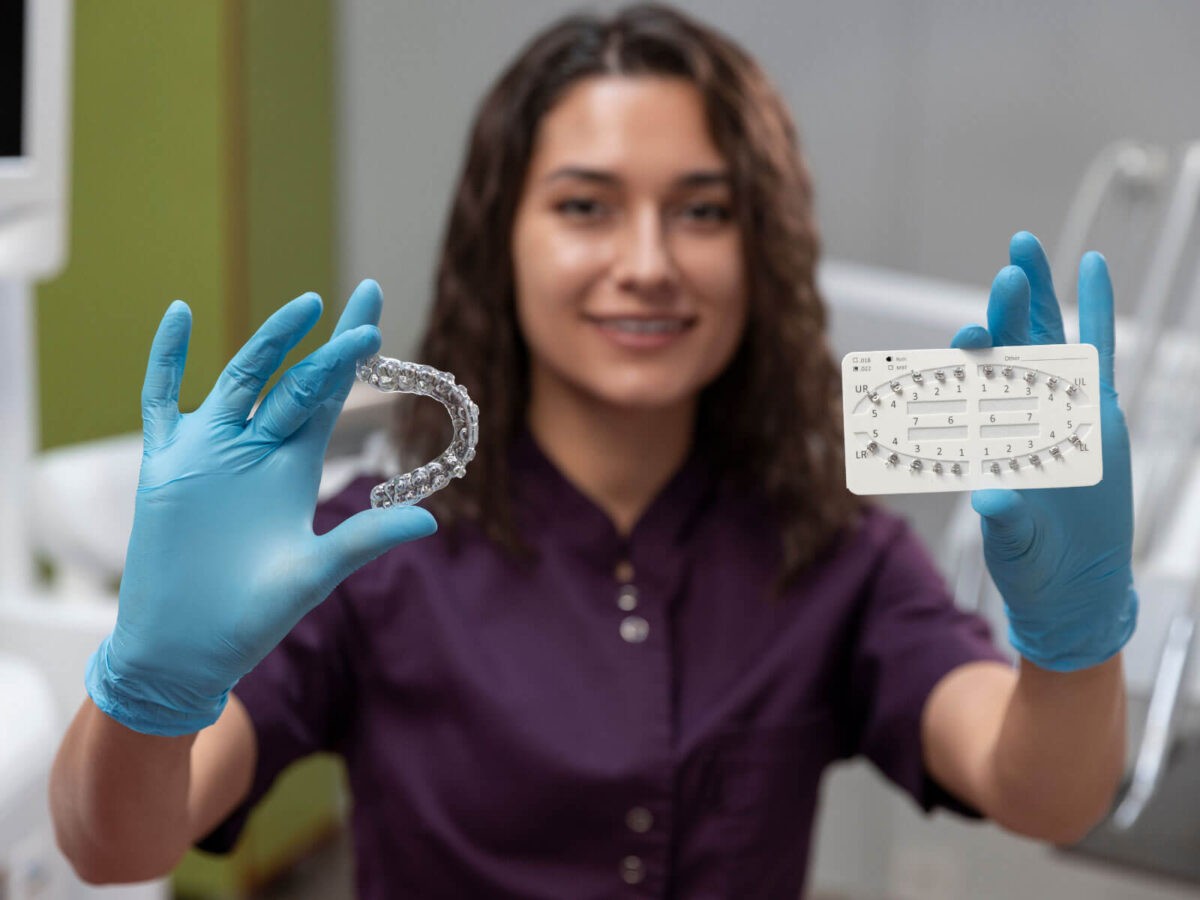
Invisalign vs. Braces: Which Costs More?
Invisalign vs braces cost looks like it should have a clean winner, and then you get two quotes, and they’re closer than you expected. Most people go in assuming aligners are the expensive option and come out unsure what they were comparing.
What moves the number is how much work your teeth need. A case that takes eighteen months and a case that takes thirty months are different prices regardless of which one you pick.
I’ve had two friends go through this decision in the past year. Both got quotes, both spent a while comparing them, and both ended up choosing based on how they’d feel wearing the thing to work.
TL;DR
Invisalign vs braces cost lands closer together than most people expect. A simple case runs about $3,000 either way. A complicated one can hit $8,000, and that’s true whichever you pick, which is why so many people get near-identical quotes for both.
Lingual braces are the exception. Everything sits behind the teeth, and each bracket gets made for one specific tooth, so the lab work alone puts it in another category. Quotes tend to open at $8,000. The top end I’ve seen quoted is $13,000.
Insurance covers either one if your plan has orthodontic benefits at all, and almost every office will split the total into monthly payments. That last part matters more to most budgets than the sticker price does.
What Actually Determines Whether One Costs More Than the Other
Complexity drives the number. A bit of crowding at the front is cheap to fix with either one, and a bite that needs eighteen months of real work is expensive with either one. The technology on your teeth is close to irrelevant next to how much moving they need.
Cleveland Clinic names Invisalign and ClearCorrect alongside metal and ceramic braces as standard orthodontic treatments, which is worth knowing if you’ve been told aligners are the premium tier. They’re an option, not an upgrade.
Where the Invisalign vs braces cost gap does show up is at the margins. Refinement trays, a longer case that runs past what was quoted, replacement aligners after one goes through the wash. Those add up on the aligner side in a way that a broken bracket doesn’t.
Invisalign vs. Braces – The Actual Price Range
Traditional metal braces
Cheapest of the four. Around $3,000 to start, more like $7,000 if your case needs the full eighteen months or beyond.
Ceramic
Add about a thousand to whatever the metal quote was. You’re buying brackets that blend into the tooth instead of sitting on it, and the ceiling ends up nearer $8,500. Nothing else about the treatment changes.
Lingual
These go behind the teeth. Each bracket is made for one specific tooth, and nobody is mass-producing those, so the whole range sits above everything else here. $8,000 is roughly where quotes start, and $13,000 is where the complicated ones land.
Invisalign
$3,000 – $8,000, which is almost exactly where metal sits. People who walked in assuming aligners were the premium option tend to be surprised by that.
Metal and Invisalign sit on top of each other for a typical mild to moderate case, which is the part most people don’t expect. Where they separate is at either end of the scale. Less lab work goes into a short course of metal braces than into a full set of custom trays, so simple cases tend to quote lower in metal. Then a long case flips it, because every extra month of Invisalign means another set of trays to manufacture.
Does Insurance Cover Invisalign the Same Way It Covers Braces
Does insurance cover Invisalign comes down to your plan rather than your treatment. Most plans with orthodontic benefits treat aligners and braces as one benefit covering both.
AAO says to contact your insurer and ask what percentage they cover, whether there’s a lifetime maximum, and whether your orthodontist has to be in-network. That last one catches people out.
Some